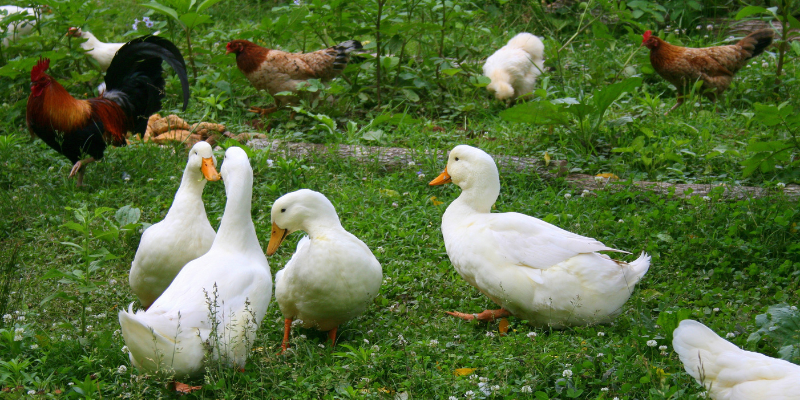
Can chickens and ducks live together? Yes, they can coexist with the right setup and a bit of planning — but it isn’t as simple as popping them in the same coop and hoping for the best. Chickens and ducks have genuinely different needs when it comes to water, diet, housing and social behaviour, and ignoring those differences is where most mixed-flock problems begin.
Short answer: chickens and ducks can share a garden and even a run, but they generally do best with separate sleeping and feeding arrangements. Below are six challenges to weigh up before keeping ducks and chickens together — and practical tips if you decide to give it a go.
Can ducks and chickens share a coop? The 6 challenges to consider
Plenty of keepers happily run a mixed flock, so this isn’t a list of reasons never to try it. Think of it instead as the honest groundwork: get these six things right and your chickens and ducks are far more likely to get along.
1. Different water needs (and the mess that comes with them)
This is the biggest single difference. Ducks need access to water deep enough to bathe in, dunk their heads and clean their bills — it’s essential for their eyes, nostrils and feather condition. Chickens, by contrast, only need clean drinking water and actively dislike a damp, muddy environment.
Mixing the two creates two problems at once. A standard chicken waterer is too shallow for ducks, while a duck’s bathing tub is quickly fouled and can pose a drowning risk to chicks and less agile adult hens. Ducks also splash constantly, turning dry ground into wet, muddy conditions that chickens hate — and persistent damp underfoot is linked to foot problems such as bumblefoot.

2. Diet differences — ducks and chickens don’t eat the same
Chickens and ducks have different dietary requirements, so a single feed rarely suits both perfectly. Ducks tend to prefer much wetter food, which can contribute to sour crop issues in chickens, and ducklings have a higher need for niacin (vitamin B3) than chicks do — a general dietary note worth knowing before you raise the two together.
There’s also a safety point with young birds: some chick crumbs contain a coccidiostat (added to help prevent coccidiosis) that isn’t suitable for ducklings. If you’re ever unsure about feed, supplements or a bird that seems unwell, check with your vet or a qualified poultry specialist rather than guessing.
3. Housing and roosting — chickens perch, ducks sleep on the ground
At night chickens like to perch up high on a roosting bar, while most ducks settle down to sleep on the ground. Put them in one coop and the ducks tend to get pooped on from above, which is unpleasant and unhygienic. Ducks also carry damp on their lower feathers, raising humidity inside an enclosed coop.
That extra moisture matters. Damp, poorly ventilated housing can make chickens more prone to respiratory problems, and both species suffer if ammonia builds up. The simplest fix is separate, purpose-suited housing: chickens in a coop with proper perches, ducks in a low, easy-clean duck house designed for ground-dwellers. Our duck house is made from the same recycled plastic as our chicken coops, so a quick hose-down is usually all it takes to get it clean.

4. Social dynamics and bullying
Do ducks and chickens get along? Often well enough in a shared space — but they have different social structures, and confining them too closely can cause friction. Hens establish a pecking order; ducks don’t communicate the same way, so squabbles and stress can flare up at feeding time or in tight quarters.
Drakes are the most common flashpoint. A drake may try to mate with your hens, and because duck and chicken anatomy differ, this can injure or even kill a hen. If you keep a drake, watch the flock closely and give the hens plenty of room and places to retreat.
5. Health and biosecurity
Chickens and ducks can carry different diseases and parasites, so housing them together increases the chance of one passing something to the other. Ducks can carry salmonella without showing symptoms and are generally more susceptible to avian influenza, which they can spread to chickens.
Historically, mixed flocks were common, but as our understanding of biosecurity has grown, many specialist poultry vets now suggest keeping the species a little more separate — especially during avian influenza housing orders. For anything health-related, your vet or a qualified poultry specialist is always the right port of call.
6. Wet, muddy conditions across the whole garden
Even outside the coop, ducks reshape the ground around them. Between bathing water and their habit of dabbling in soft earth, a duck-and-chicken garden can turn wet and muddy faster than a chicken-only one. Chickens prefer dry footing and a dust-bathing patch, so you’ll need good drainage, a generous run and perhaps a dedicated muddy zone for the ducks to keep everyone comfortable.
If you do keep chickens and ducks together: practical tips
Decided to go for it? A mixed flock can absolutely work. To give keeping chickens and ducks together the best chance of success:
- Give them separate sleeping quarters. Let chickens roost in their coop and ducks bed down in a low, ground-level duck house — everyone stays drier and cleaner.
- Provide two water stations. A shallow drinker for the hens and a separate bathing tub for the ducks, sited where splashing won’t flood the chickens’ space.
- Manage the mud. Use a large, well-drained run, move waterers regularly and give chickens a dry dust-bathing area.
- Feed thoughtfully. Offer age- and species-appropriate feed, and ask your vet or a poultry specialist about supplements such as niacin for ducklings.
- Watch the social mix. Keep an eye on drakes around hens, and make sure there’s enough space for both species to keep their distance when they want to.
New to ducks? Our beginner’s guide to keeping ducks walks through the essentials, and if you’re still choosing your flock, take a look at our pick of 8 brilliant duck breeds for beginners.
FAQ: keeping chickens and ducks together
Can chickens and ducks live together?
Yes — chickens and ducks can share a garden and a run quite happily, provided you cater to their different needs. The key is separate sleeping quarters, separate water arrangements and enough space to reduce friction.
Can ducks and chickens share a coop?
It’s best avoided. Chickens roost up high and ducks sleep on the ground, so sharing one coop leads to mess, damp and higher humidity. Give each species its own housing — a perched coop for hens and a low duck house for ducks.
Do ducks and chickens get along?
Generally yes, especially with plenty of room to roam. Watch out for drakes around hens, manage feeding so no one gets bullied, and make sure ducks’ love of water doesn’t leave the chickens in the mud.
Do ducks and chickens need different food?
Their needs differ — ducklings, for example, require more niacin than chicks — and some chick crumbs aren’t suitable for ducklings. As a general rule, feed each species appropriately and check with your vet or a poultry specialist about any supplements.
Housing your flock the easy way
Whether you keep ducks, chickens or both, the right housing makes everything simpler. Our recycled-plastic duck house is built for ground-loving ducks and wipes clean with a hose, while our chicken coops give hens proper perches, dry ventilation and red-mite-resistant, maintenance-free comfort backed by a 25-year guarantee. Give each species the home it’s designed for, and a mixed flock becomes far more manageable.