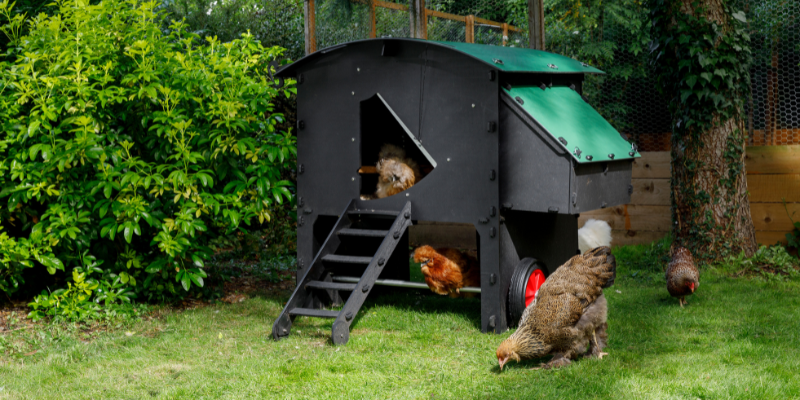
Knowing where to put a chicken coop is one of the first decisions you'll make as a new keeper, and getting it right makes everyday life with your hens easier, drier and safer. The best place for a chicken coop is level, firm, well-draining ground with partial shade, shelter from the prevailing wind, a little morning sun, and easy access for you, kept a sensible distance from the house and your boundary with neighbours.
Short answer: put your coop on level, free-draining ground in partial shade, sheltered from the prevailing wind, with the pop-hole and run facing the morning sun (roughly east or south-east) and within easy reach for daily cleaning, egg collection and topping up food and water.
Where in the garden is the best place for a chicken coop?
If you have a large garden, most people put the coop at the far end, furthest from the house, but out of sight can be out of mind. You'll need to tend your flock at least once a day to replenish food and water, collect eggs and open or close the coop door if you don't have an automatic door opener. Position the coop where you can easily see it from the house: you'll enjoy your hens more, and you'll spot any health or predator problems sooner.
Balance visibility against distance. A coop too close to the back door can mean noise and flies in summer, while one tucked too far away gets neglected. Aim for a spot you can see and reach comfortably, and be considerate of your boundary and neighbours when siting it: a little distance keeps everyone happy.

Level, firm, well-draining ground
Any site you choose needs to be level and free-draining. Waterlogged ground is the enemy of healthy hens: it turns runs to mud, chills the coop and encourages disease. Avoid dips and hollows where rainwater collects, and choose firm, level ground so the coop sits squarely and doesn't rock. Siting the coop under a tree can help, as it receives less rain runoff and the canopy breaks heavy downpours.
If your only spot tends to puddle, raise the coop. A Raised (Penthouse) Nestera coop sits 450 mm off the ground, keeping the sleeping quarters well clear of damp and giving the birds sheltered space beneath. Because Nestera coops are made from 9 mm-thick recycled plastic, they shrug off the wet far better than wood: no rot, no soaking up moisture, and an easy wipe-clean finish.
Partial shade and shelter from the prevailing wind
Shade matters. Modern hens descend from jungle fowl that lived in highly vegetated areas, so they enjoy the cover and protection that trees and bushes provide. A coop under a tree gets natural shade through the day, and if you're lucky enough to have an orchard, even better, as your hens will help control insects that damage fruit. Partial shade is ideal: somewhere the birds can cool off in summer but still catch sun on cooler mornings.
Just as important is shelter from the prevailing wind. In most of the UK that means the south-west, so use a hedge, fence, wall or building to break the worst of it. A draughty, exposed coop is a cold coop. If your garden lacks shade, a sun sail or some planting will quickly improve the spot.
Which way should a chicken coop face?
A common question is which way a chicken coop should face. As a rule of thumb, point the pop-hole and run towards the morning sun, roughly east or south-east, so the birds are greeted by early light and warmth and the run dries quickly after dew or rain. At the same time, keep the back of the coop to the prevailing south-westerly wind so the entrance stays sheltered. You won't always get a textbook aspect in a real garden, so prioritise drainage and wind shelter first, then nudge the orientation towards the morning sun where you can.
Protection from predators
Wherever you site your coop, security against predators comes first. Foxes are the biggest threat to UK flocks, and they'll test fences, dig under runs and patrol at dawn and dusk, so a secure run and a coop that shuts tight at night are essential. An automatic door opener closes the pop-hole reliably at dusk and opens it at dawn, so your birds are locked away before the fox comes calling, even if you're running late. For more on why this matters, see our guide to the benefits of an automatic door for chicken coops.
Avoid putting the coop right next to compost bins. Rodents love food waste, so they often nest in warm compost piles with a food source close by, and easy access to poultry feed encourages vermin. Only feed your hens a day's ration at a time, always use a hopper or small trough, never scatter food on the ground, and remove the feeder at dusk.
Easy access and convenience for you
The best place for a chicken coop is also one that's easy for you to use every day. Being able to reach the coop from a path rather than crossing wet grass is a real advantage: slippers and a hard path beat hunting for your wellies on a dark winter morning. Think about how you'll carry water, collect eggs, clean out the coop and rake over the run. Nestera coops make the chores quick thanks to large rear hatches, removable roofs and detachable nest boxes, all in maintenance-free recycled plastic with a 25-year guarantee, but you still want the coop within easy reach.
Sabina, our hen guru, built her chickens a brilliant permanent run in her garden; you can see the video here.

If your garden is small, you'll have fewer options. Lean on the advice above and use fences and buildings for shelter and shade; a sun sail can add cover where there's none. Remember, too, that the coop itself is only the bedroom: chickens spend the day outside in the run or free-ranging and go in mainly to roost at night and lay. So put most of your space budget into the run or garden, not into an oversized coop. If you're weighing up dimensions, our guide on how big a chicken coop should be explains why a snug, well-sited coop is warmer and easier to manage than a large one.
Movable coops let you rotate the ground
One advantage of a lighter, movable coop and run is that you can shift them every week or two to give the grass a rest and stop one patch turning to bare mud. Rotating the ground keeps the area fresher, spreads droppings and reduces the build-up of parasites. Nestera coops are light enough to reposition, and a set of 2 wheels makes moving the coop a one-person job. If you go for a fixed run instead, the proximity to grass matters less, as the birds will graze it bare quickly, so plan to top up with a balanced feed and keep wood-shaving bedding dry under cover.
Settling your flock into a newly sited coop is easier if you time it well: our guide on the best time to put chickens in the coop walks you through getting them roosting happily in their new home.
FAQ: where to put a chicken coop
Which way should a chicken coop face?
Aim the pop-hole and run towards the morning sun, roughly east or south-east, so the birds get early light and the run dries quickly, while keeping the back of the coop to the prevailing south-westerly wind for shelter. In a real garden, prioritise good drainage and wind protection first, then orient towards the morning sun where you can.
How far from the house should a chicken coop be?
There's no fixed rule, but keep it close enough to see and reach easily for daily care, yet far enough that summer flies and noise aren't a nuisance, and a courteous distance from your boundary with neighbours. A spot you can see from a window is ideal for spotting problems early.
Should a chicken coop be in sun or shade?
Partial shade is best. Hens need shade to cool off in summer and shelter from wind and rain, but a little morning sun warms them and dries the run. Site the coop where it gets shade for part of the day, sheltered from the prevailing wind.
Can I move my chicken coop around the garden?
Yes, a lighter movable coop and run let you rotate the ground so no single patch turns to mud, which keeps the area fresher and reduces parasites. A set of wheels makes repositioning a Nestera coop quick and easy.
Final thoughts on the best location for a chicken coop in the garden
Where you site your coop is an important decision, so weigh up drainage, shade, wind shelter, orientation, predator security and easy daily access, and remember that the more outdoor space you give your birds, the happier and healthier they'll be. Start with a small flock (three hens is a good minimum) and add to it later once you've found your rhythm.
Ready to choose a coop built for British weather? Explore the Nestera recycled-plastic chicken coops in House, Lodge and Raised styles for 2 to 15 hens: maintenance-free, red-mite resistant, easy to clean and backed by a 25-year guarantee. Happy chicken keeping!