Understanding the different types of chicken feed is the single best thing you can do for a healthy, productive flock, because hens need different nutrition at every stage of their lives. Just like us, chickens have changing dietary requirements as they grow, mature and come into lay.
This is chicken feed explained simply: which feed to use at each age, the difference between pellets and mash, and how grit, oyster shell and treats fit in. Get the basics right and you will have contented hens laying lovely eggs for years.
Short answer: feed chicks crumb (0–6 weeks), move to growers' pellets or mash (6–18 weeks), then switch to layers' pellets or mash from point of lay onwards. Add flint grit for digestion, oyster shell for eggshell strength, and keep treats such as mixed corn to under 10% of the diet.
The Main Types of Chicken Feed by Life Stage
Complete chicken feeds are formulated for a bird's age, so the protein and calcium levels match what the body needs at the time. Using the wrong feed for the wrong age, especially giving high-calcium layers' feed to young birds, can do real harm. Here is the age-and-stage progression to follow.
Chick Crumb (0–6 weeks): The Starting Point
When you first welcome fluffy chicks into the world, their feeding journey begins with chick crumb. Chick crumb is finely ground so tiny beaks can manage it, and it is high in protein (typically around 18–20%) to fuel rapid early growth. It is often sold as a "starter" feed and may be available with or without a coccidiostat to help protect against coccidiosis. Offer it as their only feed, alongside fresh water, from day one until about six weeks of age.
Growers' Pellets or Mash (6–18 weeks): The Teenage Years
As your chicks feather out and grow, they graduate from crumb to growers' feed at roughly six weeks. Growers' pellets or mash supports steady development through the "teenage" pullet stage, with a moderate protein level and, crucially, without the extra calcium found in layers' feed. Too much calcium before a pullet is ready to lay can strain young kidneys, so growers' feed is the right choice from about 6 weeks to point of lay (around 16–18 weeks, depending on breed).
Layers' Pellets or Mash (point of lay onwards): Feed for Eggs
Once your hens approach point of lay, usually around 16–18 weeks, it is time to switch to layers' feed. Layers' pellets or mash are designed for hens in production, with around 16% protein and significantly higher calcium to support strong eggshells day after day. Make the change gradually over a week or so, mixing growers' and layers' feed together at first, to let their digestion adjust. This is the feed your hens will stay on for the rest of their laying lives.
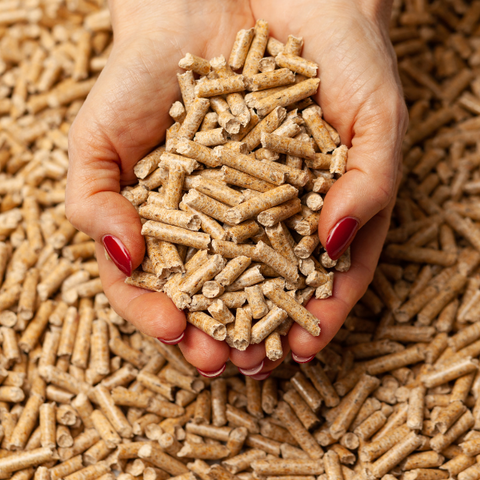
Layers' Pellets vs Mash: Which Form Should You Choose?
Most layers' and growers' feeds come in two forms — pellets or mash — and the nutrition is essentially the same. The choice comes down to how your hens eat and how much waste you can live with.
- Pellets: compressed and uniform, so there is very little waste and hens can't pick out favourite bits. They're quick and tidy to serve, which makes them the most popular choice for most keepers.
- Mash: a finer, ground texture that takes hens longer to eat, which can keep them busy and reduce boredom and feather pecking. The trade-off is more waste, as mash is easily billed out of the feeder, and some keepers dampen it into a warm porridge in winter.
There is no wrong answer. Many keepers offer pellets day to day and use mash as an occasional treat, or switch to mash if a flock is prone to boredom in a smaller run.
Grit and Oyster Shell: The Essential Extras
Alongside their complete feed, hens need two supplements that are easy to overlook: grit for digestion and oyster shell for calcium. They do different jobs, so it helps to provide both in a small separate pot the birds can help themselves to.
- Flint grit (insoluble): chickens have no teeth, so they swallow small hard stones that sit in the gizzard and grind food down. Flint grit doesn't dissolve, so it stays put and does the mechanical work of digestion. Birds with access to a garden often pick up some naturally, but a pot of flint grit makes sure they never go short.
- Oyster shell (soluble): this is a calcium supplement, not a grinding aid. It dissolves and tops up the calcium a laying hen needs for strong shells, on top of what's already in her layers' feed. You can also make a thrifty home version from baked, crushed eggshells — we explain how in our guide to homemade grit from repurposed eggshells.
Mixed Corn and Treats: Keep Them Under 10% of the Diet
Treats are a lovely way to bond with your flock, but they are exactly that — treats. Mixed corn, scratch grains, seeds, mealworms and kitchen scraps are tasty but not nutritionally complete, so they should make up no more than around 10% of the daily diet. Let treats creep higher and you dilute the balanced nutrition in their proper feed, which can dent both health and egg quality.
A handful of mixed corn scattered in the late afternoon is a classic: it encourages natural foraging and the extra energy helps hens stay warm overnight in winter. If you'd like to offer treats that genuinely earn their keep, take a look at our roundup of 7 chicken-safe insects your flock will love.

Feeding for Better Eggs
Once your hens are in lay, the quality of their feed shows up directly in the egg basket — in shell strength, yolk colour and laying consistency. For a deeper dive into the nutrition behind a great egg, see our guide to what to feed your hens for high-quality eggs. Pair good feed with a clean, dry, draught-free coop and you give your flock the best possible start each day.
Frequently Asked Questions
What do you feed chickens at different ages?
Chick crumb from hatching to about 6 weeks, growers' pellets or mash from roughly 6 to 18 weeks, then layers' pellets or mash from point of lay (around 16–18 weeks) for the rest of their laying lives. Always provide fresh water and offer grit and oyster shell separately.
What is the difference between layers' pellets and mash?
They contain the same balanced nutrition; only the form differs. Pellets are compressed, tidy and low-waste, while mash is a finer ground texture that takes longer to eat and can reduce boredom but creates more waste. Choose whichever suits your flock and feeder.
Can I give chick crumb or growers' feed to laying hens?
It is best not to. Laying hens need the extra calcium in layers' feed to form strong eggshells, which crumb and growers' feed don't provide. Conversely, never give high-calcium layers' feed to chicks or growing pullets, as the excess calcium can harm young birds.
Do chickens really need grit if they have layers' feed?
Yes. Flint grit is mechanical, not nutritional — it sits in the gizzard to grind food, a job no feed can do on its own. Oyster shell is a separate soluble calcium supplement. Offering both in a small pot lets hens take what they need.
Get the feed right and the rest of good chicken keeping falls into place — but it all starts with a coop that keeps your flock dry, draught-free and secure overnight. Explore the Nestera recycled-plastic chicken coops, easy to clean and built to last with a 25-year guarantee, so feeding time stays the highlight of your day.