If you keep hens, you'll soon learn that what comes out of a chicken's vent isn't just eggs. The vent is the single opening at a hen's rear that handles both droppings and egg-laying, so all sorts of things can appear there — most of them completely normal, a few worth a closer look. This guide explains what can come out of a chicken, what's perfectly healthy, and what warrants a call to your vet.
Short answer: normal eggs, droppings (including smelly caecal droppings), the odd soft-shelled or shell-less egg, double-yolkers and wind eggs are all part of everyday hen-keeping. A "meaty" lash egg, a prolapse, persistent blood or a poorly-looking bird are the signs to act on — for those, speak to your vet or a qualified poultry specialist.
(Please note: some of the images in this article may be upsetting for some readers.)
First, what is a chicken's vent?
A hen has one rear opening — the vent, or cloaca — through which she passes droppings and lays her eggs. Because everything shares that exit, the things you find in the nest box or run can range from a perfect egg to a worrying-looking mass. Knowing what's normal saves a lot of unnecessary panic. For more on the laying side of things, our guide to all your laying questions answered is a useful companion read.
Normal eggs — and the occasional weird one
The usual thing to come out of a hen's vent is, of course, an egg. But hens — especially new layers — produce some odd ones now and then, and these "weird things chickens lay" are usually harmless.
- Soft-shelled or shell-less eggs: an egg with a thin, rubbery membrane and little or no shell. An occasional one is common, often when a hen is coming into lay, in hot weather, or after a fright. If it keeps happening, it can point to a calcium shortfall — offering crushed oyster shell or eggshell on the side usually helps. Our piece on repurposing eggshells for calcium explains how.
- Double-yolkers: two yolks in one shell, caused by two yolks being released close together. Most common in young hens finding their rhythm — and a nice surprise at breakfast. (Whatever lands in the nest box, it's worth knowing whether to wash fresh eggs before storing them.)
- Wind eggs (fairy eggs): tiny yolkless eggs, sometimes called "fart eggs." A normal hiccup in the laying system, particularly as hens start or wind down.
- Eggs streaked with blood: very common in young pullets just starting to lay, as the oviduct stretches and small capillaries tear. If the hen seems well and there's no blood around the vent itself, it's nothing to worry about. Persistent blood, or blood with an unwell bird, is a reason to call your vet.

Droppings: what's normal and what's not
Most of what comes out of a chicken's vent is, sensibly enough, droppings. They look more alarming than they are, so it pays to know the normal range.
Dark droppings with a white "cap"
Healthy chicken droppings vary in size by breed and shift colour with diet — greener after a day grazing grass, for instance. The white cap on top is the urine portion: birds don't pass liquid urine the way mammals do, so it comes out together. A well-formed dropping with a white cap is exactly what you want to see.

Caecal droppings
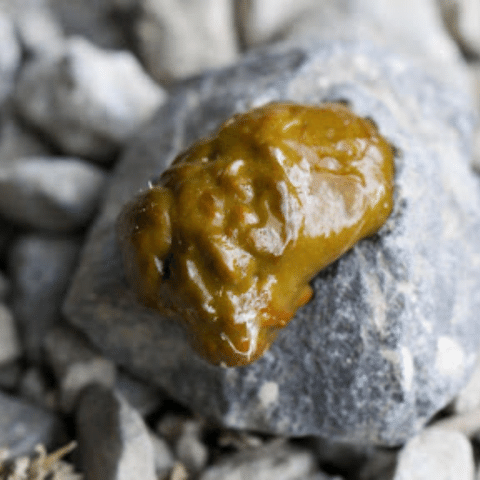
Chickens have two caecal (see-kel) pouches as part of their digestive system, and they empty these a few times a day. Caecal droppings are slimy, mustard-to-brown in colour and notoriously smelly — which leads many keepers to fear their birds have diarrhoea. They don't: caecal droppings are perfectly normal and nothing to worry about.
Worms
Hens kept on the same ground for a long stretch can pick up intestinal worms. There are several types, and some are large enough to be seen with the naked eye in the droppings. If you suspect worms — or spot them — speak to your vet or a qualified poultry specialist, who can confirm what you're dealing with and advise on the right worming approach and timing for your flock. Rotating ground and good coop hygiene help reduce the risk in the first place.
Lash egg (salpingitis)
Occasionally you'll find something "meaty" looking in the coop or run — this is a lash egg. Despite the name it isn't really an egg: it's a firm mass of material that can include egg white, yolk, shell and membrane, ovarian tissue, blood and waxy pus, formed in response to an infection of the hen's oviduct (salpingitis). Sometimes a hen passes the lump and carries on as normal; in other cases it signals something more serious and ongoing. Because a lash egg points to infection, this is one to take to your vet or a qualified poultry specialist for proper assessment.

Vent gleet
Vent gleet is a fungal infection, a little like thrush. The tell-tale signs are feathers below the vent looking wet and matted with a pasty deposit, often with a strong smell. It has several causes and an affected bird needs proper care, so if you spot these signs, contact your vet or a qualified poultry specialist for the right course of action rather than relying on home remedies.

Prolapsed vent
Very occasionally a hen will prolapse — a dark, bulbous mass protrudes from her rear after she strains to pass a large egg. It's more likely in overweight older hens or in young hens that start laying too early. A prolapse is a genuine emergency: other hens are drawn to peck the exposed area, which bleeds easily and can quickly become life-threatening. Move the affected hen somewhere quiet, safe and away from the rest of the flock to stop further pecking, and contact your vet or a qualified poultry specialist straight away. This is not something to treat at home on your own.
How a good coop helps
You can't prevent every odd thing a hen produces, but a clean, dry, low-stress home goes a long way — calmer birds, steadier laying and far fewer hygiene problems. A snug, well-ventilated coop where every bird can roost and nest comfortably keeps droppings manageable and makes it easy to spot anything unusual early. A Nestera recycled-plastic coop is built for exactly that: 9mm-thick UV-resistant walls, large rear hatches and removable roofs for quick cleaning, and a red-mite-resistant design — all backed by a 25-year guarantee. Spotting changes in your hens' droppings or eggs is also far easier when feathers and condition are healthy; our guide to normal feather loss in chickens helps you tell ordinary moulting from a problem.
Frequently asked questions
What comes out of a chicken's vent besides eggs?
The vent handles both laying and droppings, so as well as eggs you'll see normal droppings and smelly caecal droppings. Less often you might find soft-shelled or shell-less eggs, wind eggs, a lash egg, or — rarely — a prolapse. Most are normal; the abnormal ones are worth a vet's input.
Is a soft-shelled egg something to worry about?
An occasional soft-shelled or shell-less egg is common, especially in new layers, hot weather or after a scare. If it keeps happening it may signal a calcium shortfall, so offer crushed oyster shell or eggshell on the side. Persistent problems alongside an unwell bird are worth discussing with your vet.
What is a lash egg?
A lash egg is a firm, "meaty" mass — not a true egg — formed in response to an oviduct infection called salpingitis. It can contain egg material, tissue, blood and pus. Because it points to infection, have your hen checked by your vet or a qualified poultry specialist.
My hen has a prolapse — what should I do?
Treat it as an emergency. Move her somewhere quiet and safe, away from the flock so other hens can't peck the exposed area, and contact your vet or a qualified poultry specialist immediately. Don't attempt to treat a prolapse at home on your own.
However careful you are, the occasional surprise in the nest box is part of keeping hens — the key is knowing what's normal and acting quickly on what isn't. Giving your flock a clean, secure and comfortable place to roost and lay makes everything easier. Explore the full range of Nestera chicken coops and give your girls a home they'll thank you for.